.svg)
.png)
%201.png)


Managing Merchant Credit Risk: Strategies for Payment Companies
merchant credit risk
Coris integrates with Stripe Radar to centralize alerts, automate risk actions, and save SaaS and fintech teams hours each week on fraud management.


Coris is modernizing SMB risk infrastructure for the world’s leading SaaS and fintech companies. Today, we’re excited to double down on that mission with our integration with Stripe Radar.
For the first time, software platforms using Stripe Connect and Radar can consolidate Radar alerts across all of their instances and take action in a unified platform. This automates risk management and saves teams dozens of hours per week.
Stripe Connect offers customers the ability to have different “instances” based on currency codes, countries, etc. This gives customers flexibility, but increases operational complexity as risk reviews are spread across multiple instances. As a result, risk teams have to monitor and act on Radar alerts across multiple surface areas, creating extra work and opportunities for fraudulent transactions to slip through the cracks.
This absence of data centralization can also inhibit comprehensive risk decisioning. As we’ve previously discussed, Stripe Connect only analyzes data in a company’s Stripe instance. However, SaaS platforms often combine Stripe data with other merchant data when making risk decisions.
We built our Stripe integration last year to address many of these problems. After noticing customers’ cumbersome Radar workflows, we asked ourselves: can we consolidate Radar alerts into our platform and empower teams to manage risk more seamlessly?
Our Stripe Radar integration centralizes Radar alerts across all instances in one place. It also enables unique actions on these alerts, such as clearing alerts, refunding payments, and delaying payouts. The consolidated view and one-click actions save risk teams significant time.
Stripe Radar alerts are consolidated under the “Transactions Reviews” tab in the Coris dashboard. It provides detailed insights on each payment, which are outlined below.
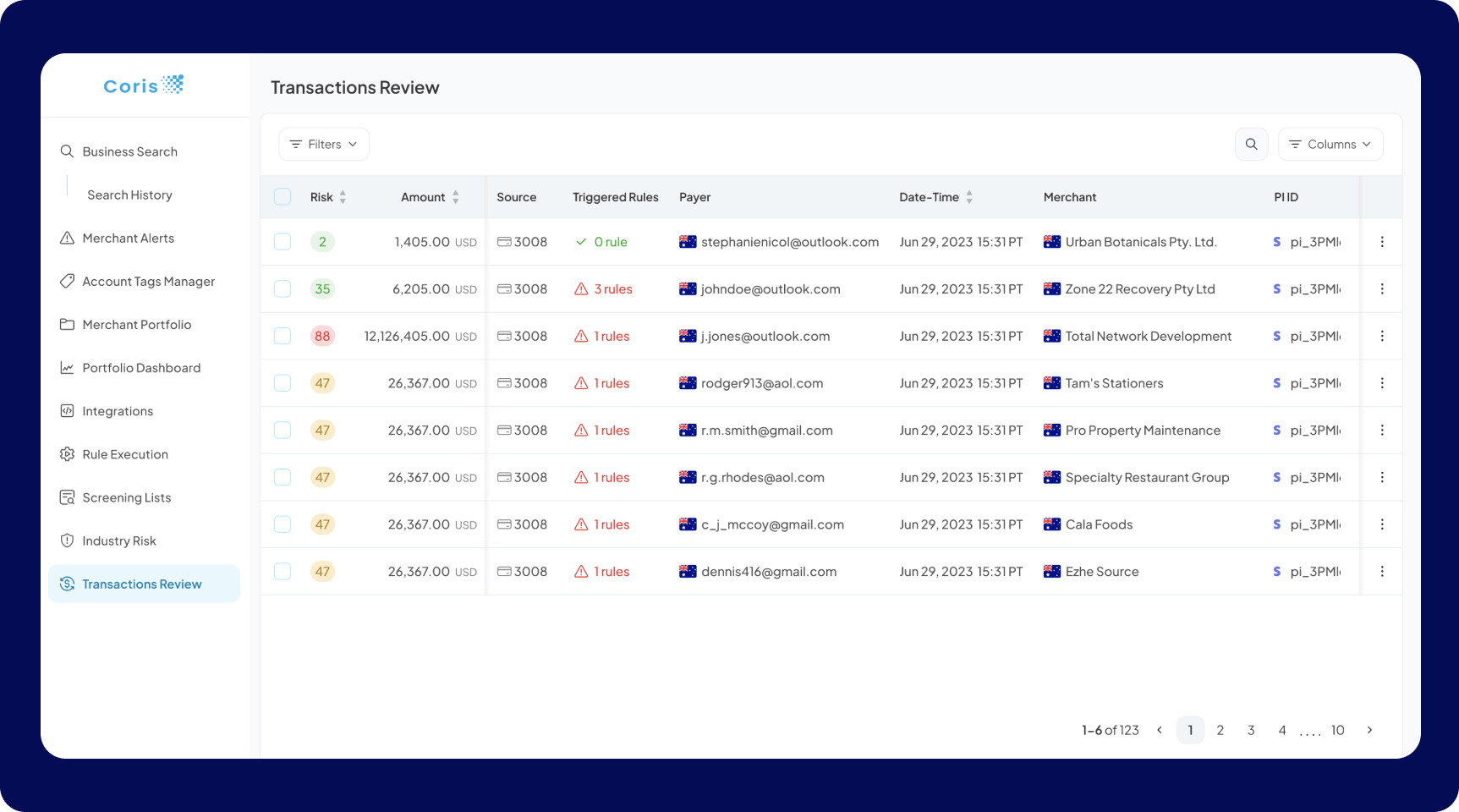
For each payment, the dashboard surfaces key attributes such as payment intent ID (PIID), date & time, payer and merchant, risk level, payment source, triggered rules, and more. Teams can customize the dashboard view by showing and hiding columns.
Teams can filter payment transactions by amount, date and time, card verification checks such as address verification (AVS) and card verification value (CVV), payment status, and review status.
This includes:
All of this data helps teams address the riskiness of a payment.
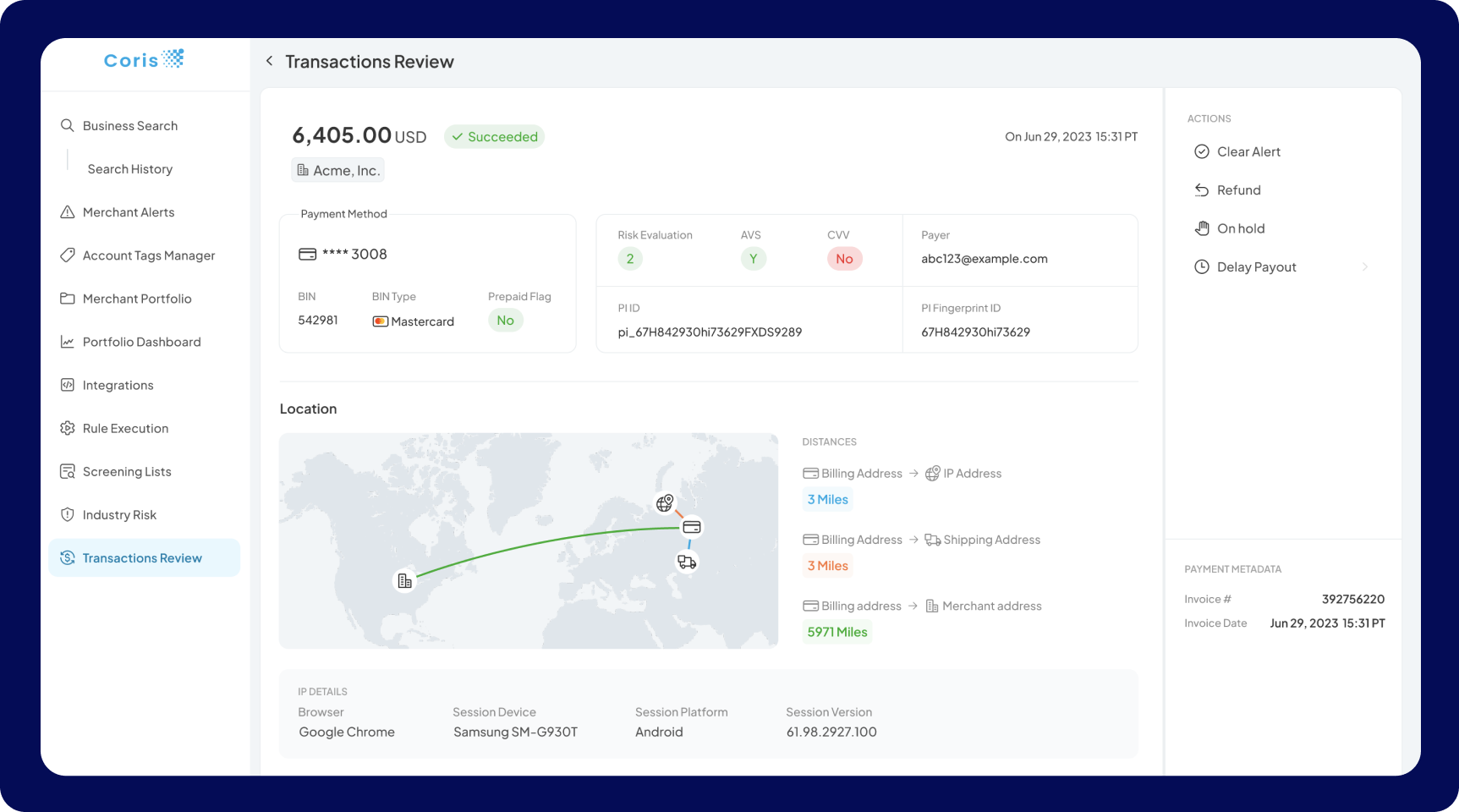
These actions leverage Fuzio, our risk management platform, and are different from the out-of-the-box actions offered by Stripe Radar. They specifically focus on the actions risk teams need to take after a payment has been approved. These actions can be enabled on individual alerts or multiple alerts:
We’ll continue to expand on this Stripe Radar integration in the next few weeks. For example, risk teams will soon be able to use Risk AI, our autonomous agent for risk workflows, to clear false positive alerts coming through Stripe Radar.
Want to learn more about our Stripe Radar integration, or have a use case you’d like us to address? Reach out.

Follow us




.svg)